
How to plan a table tennis tournament: categories, schedule and setup
What clubs should decide before publishing the announcement: format, categories, registration, schedule, tables, roles and communication.
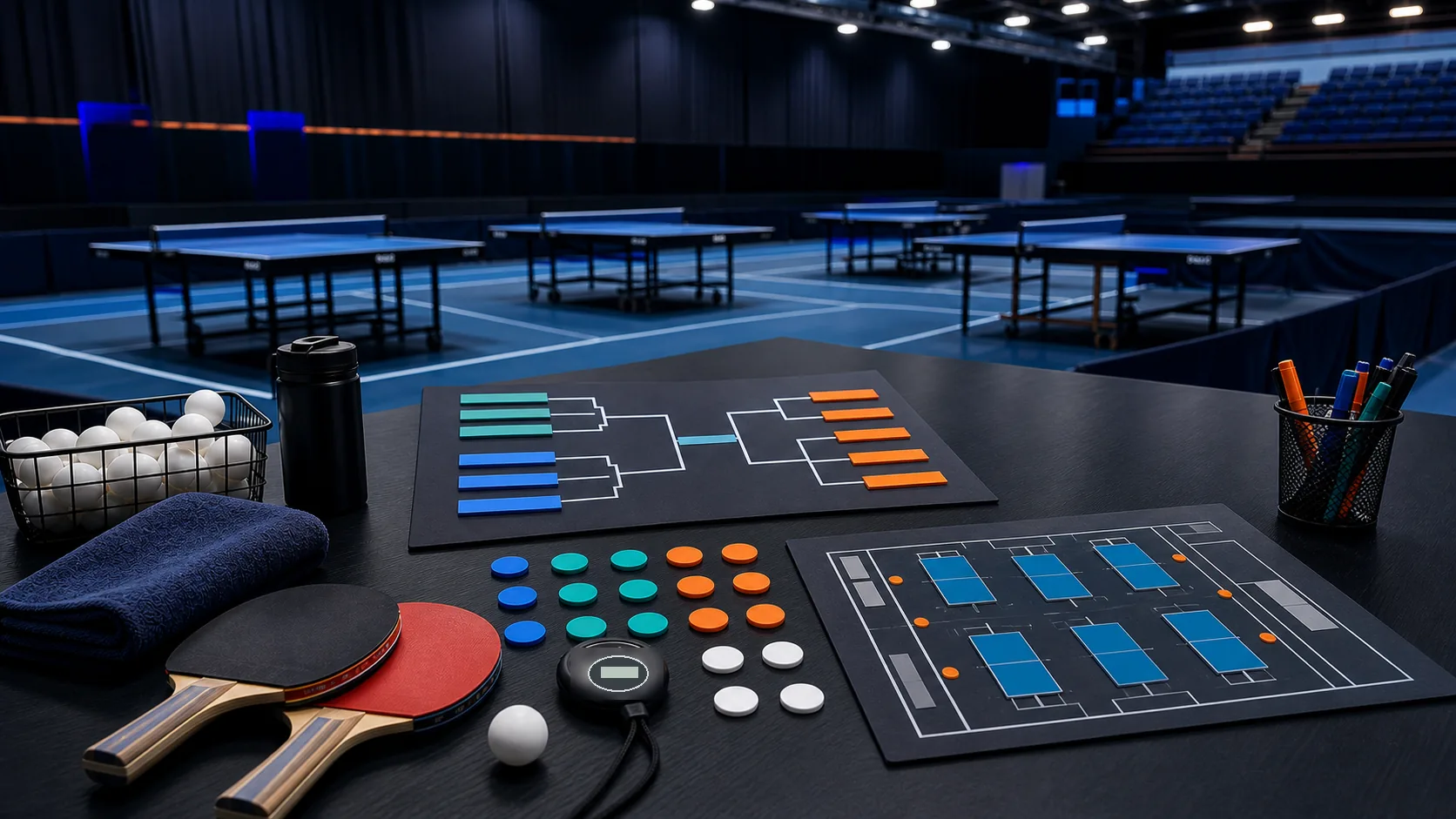
A table tennis tournament runs smoothly on event day only when the important decisions are made earlier. The key questions arrive before the first draw: Which categories exist, how many players fit into the venue, when do events start and who owns each role?
For clubs in Austria, planning is often volunteer work alongside training, league play and club administration. That is why the plan should be simple enough to execute, but precise enough that organizers do not need to improvise all day.
Start with the right format
The tournament format shapes almost everything that follows. Group play, knockout brackets, Swiss system or combinations create different numbers of matches, waiting times and explanations.
For youth or hobby events, several guaranteed matches may matter more than finding a winner quickly. For open categories, a clear knockout phase can work well when venue time is limited. The important point is that format and time window fit together.
Define categories deliberately
Categories make a tournament attractive, but they can overload operations. Age groups, strength classes, hobby events, doubles and open categories should be planned so players are not constantly needed in parallel.
Set minimum and maximum fields per category, decide how waitlists work and define when a category is merged or cancelled. These rules belong in the announcement so fewer disputes appear later.
Treat registration as operational data
Registration is not just a participant list. It is the data basis for categories, waitlists, communication, payment status and draws. If this information is incomplete, the work moves to event day.
Keep required fields lean but firm: name, club, contact, categories and relevant notes. If entry fees are collected manually, payment status should be visible from the beginning, even without online payment.
Build the schedule backwards from the venue
A schedule often looks more stable on paper than it feels in the hall. Work backwards from available tables, expected match duration, breaks, setup time and helper capacity.
Buffer is not a luxury. It protects against normal events: missing players, longer matches, a table issue or score corrections. A good schedule has clear start windows and enough room to recover.
Clarify roles before event day
The tournament desk needs more than one person with an overview. Useful roles include registration desk, table control, score checking, hall communication and technical support.
Even smaller clubs benefit when every role knows which decisions it can make and when to return to the main organizer. That saves time when the hall gets busy.
Keep communication short and repeatable
Players need clear information: registration, start times, categories, venue address, payment approach, rules and event-day updates. The fewer special channels you use, the fewer questions appear.
Turniero's beta is meant to translate this plan into one connected workflow: registration, categories, draws, tables, results and public views use the same state. The goal is not maximum automation, but controlled tournament operations for real club events.

