
Managing tournament day: registration, tables, matches and results
An operational guide for check-in, late changes, table control, match queues, score entry and live public updates.
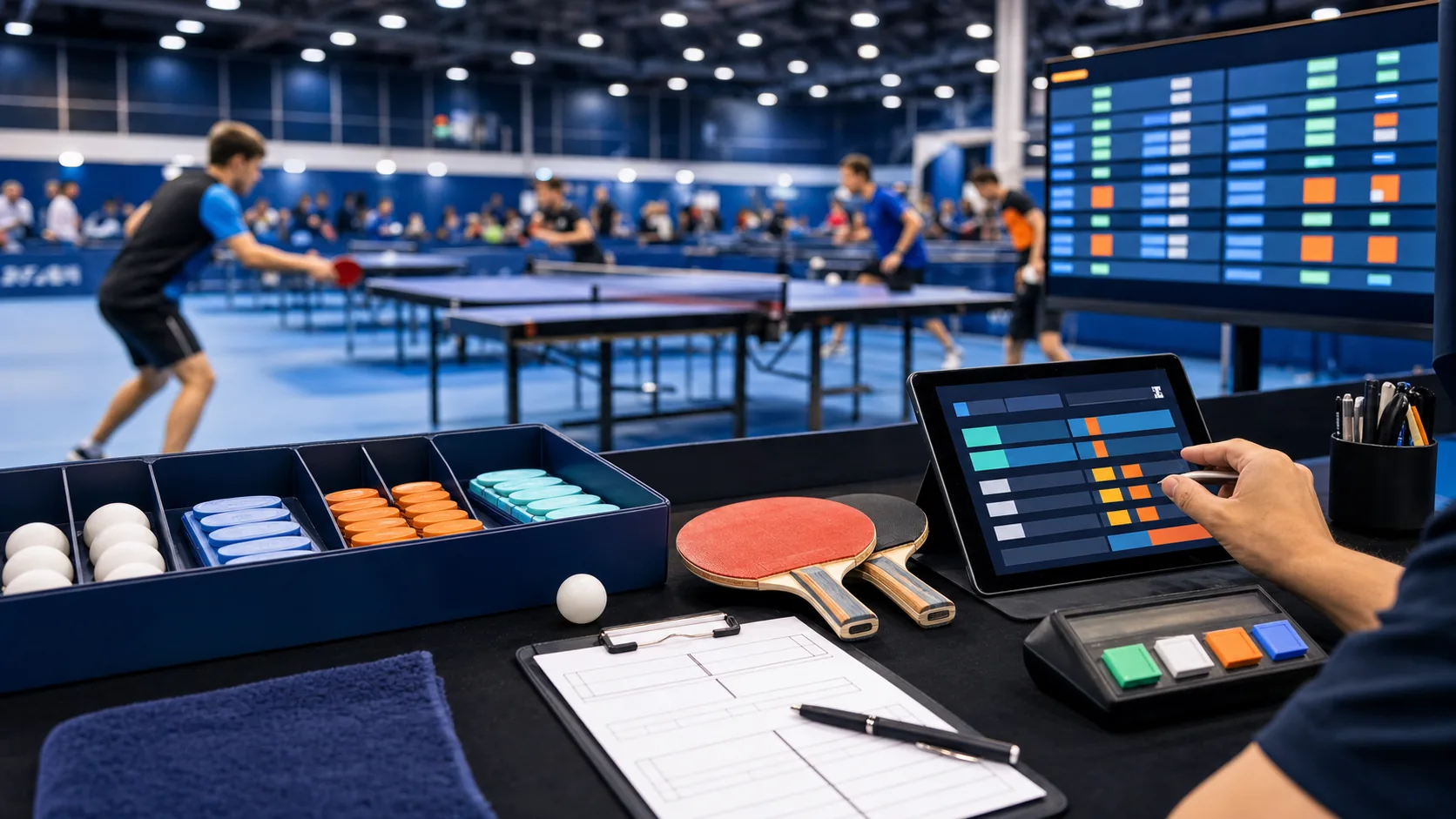
On tournament day, the perfect plan matters less than the organizer's ability to handle change. Players arrive late, categories shift, tables become free or blocked, and results need quick checks.
A good workflow makes that movement visible. Registration desk, table control, match queue, score entry and public views should all use the same tournament state so nobody works from outdated information.
Make the registration desk the pace-setter
The day starts with check-in, open questions and last corrections. Organizers should immediately see who is present, who is missing, which categories are affected and which payments are still open.
Clear rules for late entries and withdrawals matter. Every change should happen where draws, waitlists and participant status are visible. Otherwise parallel lists appear and become hard to reconcile later.
Separate draw creation from release
Many errors happen when draws are shared too early or late changes are not communicated cleanly. A deliberate sequence helps: check the category, confirm the participant state, create the draw, then release it.
If a category is still uncertain, it should not circulate as half-official. Players need clear updates, and organizers need room to make controlled corrections.
Actively control tables
Table tennis tournaments quickly turn into waiting time when free tables are missed or a table is reserved for the wrong match. Every table should have a visible status: free, active, reserved or blocked.
The central question is: Which match should go to which table next? That decision should reflect category, round, player conflicts and table availability, not only ad hoc calls across the hall.
Use a match queue instead of isolated decisions
A match queue reduces pressure at the tournament desk. It shows which matches are ready, which need to wait and where a player is already needed in another category.
This becomes especially useful with multiple events. Organizers can spot bottlenecks before players stand at the wrong table or one category waits longer than necessary.
Enter scores quickly and check them
Scores should be entered as close to the match as possible and then checked briefly. A fast score only helps if set result, winner and next match are correct.
The workflow also needs room for corrections. Mistakes happen during busy phases. What matters is that the correction is traceable and public views show the same updated state afterward.
Keep live and public updates calm
Players and spectators do not need internal detail. They need reliable information: next match, table, status and result. When these views come from the operational state, questions at the desk drop.
Turniero's beta is focused on keeping this chain together: registration, table control, live matches, score entry and public updates. The goal is a faster tournament day without losing the shared state.

